
How Seeqer measures AI visibility - and what the numbers mean
A visibility score is an observation, not a view into every AI conversation. Here is how Seeqer turns queries into measurements, and where their limits lie.
First, what are we actually measuring?
When someone asks an AI assistant for a recommendation, your brand might appear. It might not. A monitoring tool can ask a defined set of questions, record the answers and compare them. It cannot see every private conversation, know every question your customers ask, or hand you a universal AI ranking.
Seeqer measures responses to the queries you configure across the engines you select. Those observations help you understand whether your brand appears, which other names appear alongside it, and how that pattern changes. The usefulness comes from a clear test and a readable history, not from pretending the sample is the entire market.
1. The question defines the test
A query such as “What is Example Brand?” practically invites a brand mention. “Which refillable home care brands are worth considering in Germany?” tests something different: whether the brand appears in a category-level answer without being named in the question.
Seeqer's AI Wizard uses website or social-profile content to identify context and prepare a suitable query in the detected language. That is a starting point, not a verified inventory of customer demand. Review the wording, target brand, market and language, then add the other questions that matter to your business.
In market-research mode, the question explores a topic rather than testing a target brand. Target-mention tracking is not the same measurement in that mode. Read the discovered entities and answers as category research, not as a score for a brand you have not defined.

2. A scan records engine responses
For each configured query, Seeqer requests answers from the selected AI engines through their programmatic interfaces. The supported engine labels include ChatGPT, Gemini, Perplexity and Claude. Successful responses are stored with the query, engine and scan time, along with the returned answer text and detected results.
These are controlled API observations. They are not recordings of real users' conversations, and they are not a simulation of every consumer chat session. Model versions, system instructions, available search tools, location and a user's conversation history can all affect the answer. A manual check in a consumer app may therefore differ from a Seeqer scan.
That distinction is important when a tool claims to show “what ChatGPT says”. The defensible interpretation is what the selected engine returned for this test, in this configuration, at this time.
3. Visibility, rank and citation are different signals
- Brand detection
- Seeqer checks configured brand keywords in the answer and the target domain in returned citations or detected URLs. A match records presence. It does not, by itself, establish a positive recommendation or correct description.
- Visibility score
- For target monitoring, the score expresses the proportion of evaluated responses marked as mentioning the target, rounded to a whole percentage. Failed engine requests are not stored as successful answers. Read the score together with the response count and engine coverage.
- Extracted position
- Seeqer parses entity order from answer structures such as numbered lists and bold names. An extracted position is not a search-results rank, and unstructured prose may not provide a meaningful order. Parsing and fallback ordering can influence the result, so inspect the answer before treating a position as an explicit preference.
- Citations and URLs
- Perplexity supplies a citation array; other responses can contain URLs detected in the text. A supplied citation and a URL written in prose are not equally strong evidence of retrieval. Neither is proof that the engine endorses your brand or that the source is correct.
Brand names can be ambiguous, and keyword matching is not human interpretation. An incidental reference, a negative comparison or a similarly named entity can affect detection. Check the saved response, especially when a result looks unusually good or unexpectedly poor.

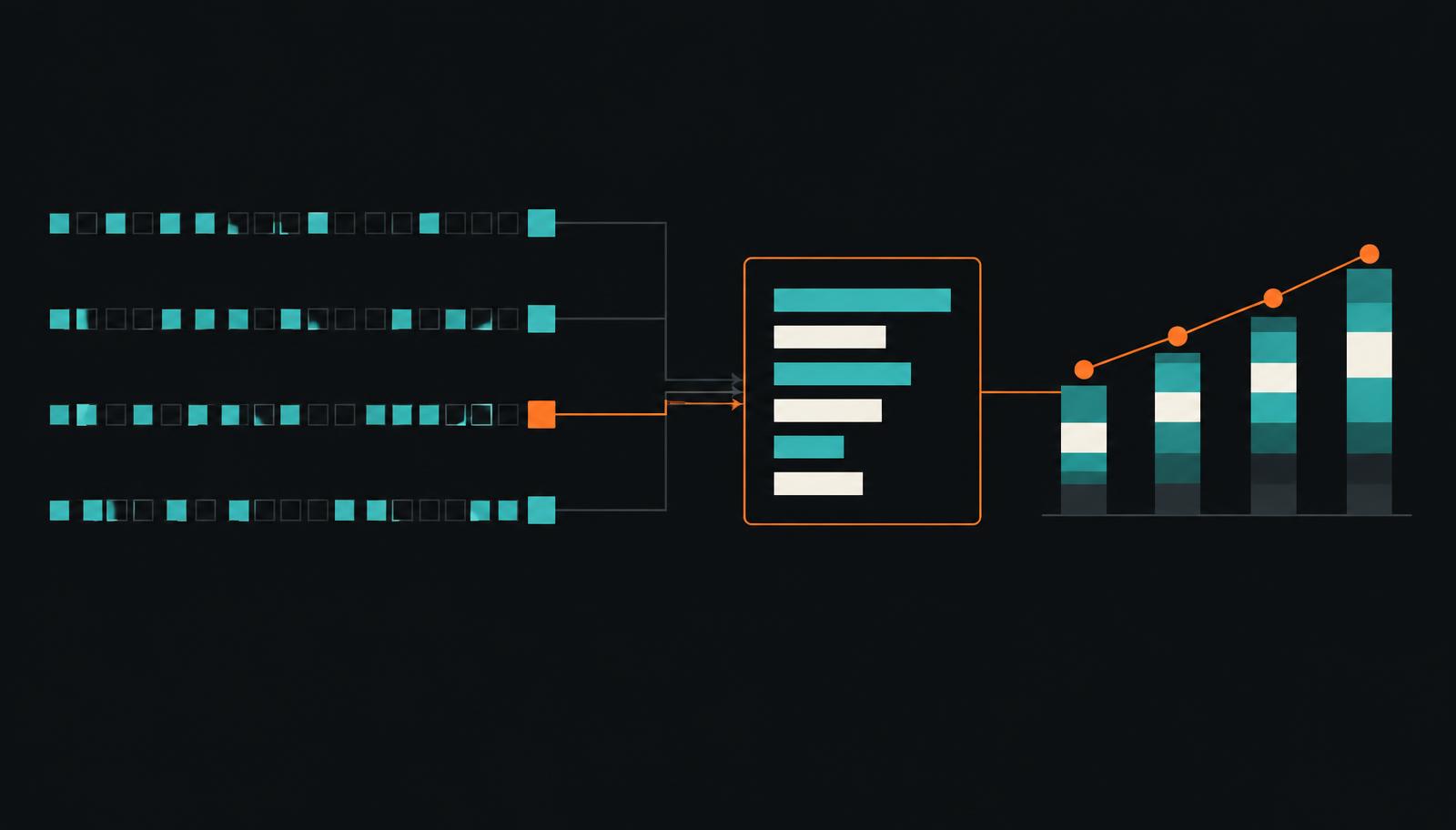
In the invented example above, three mentions in five responses give a 60% mention rate for Query A. Four in five give 80% for Query B. Those percentages describe the tiny samples shown. They do not mean 60% or 80% of AI users see the brand, and they are not measured customer reach.
4. Repetition makes the result more useful
AI answers can vary even when the question stays the same. OpenAI's documentation explicitly describes this nondeterminism and notes that reproducibility is not guaranteed even with controls intended to improve consistency. Search content and model behavior also change over time.
Repeat a stable query before concluding that one new mention is a breakthrough or one missing mention is a crisis. Compare the same market, language and engine set. If one engine fails, a combined score may move simply because the response mix changed. If you change the query, treat that as a changed test rather than a clean before-and-after comparison.
Seeqer's history lets you follow observations over time; scheduled scans and reporting depend on your plan. Repeated observations help distinguish a recurring pattern from a one-off answer. They still do not prove that a website edit caused the change, because the engine and its sources may have changed too.
What to do with the evidence
- Start with relevant, unbranded questions. Include genuine comparison and use-case questions, not only prompts guaranteed to repeat your name.
- Inspect answers, not just percentages. Is the description accurate? Is the brand recommended, criticised or merely mentioned? Are the detected competitors actually relevant?
- Keep comparisons fair. Record query changes, examine engines separately and check how many successful responses support a result.
- Turn recurring gaps into hypotheses. Improve unclear product information, outdated claims or missing topic coverage, then observe again. Seeqer's AI advice can suggest actions; it cannot guarantee a future recommendation.
AI visibility is one piece of the picture. Use your website analytics and registration data to learn whether attention turns into visits and customers. A mention is not a visit; a visit is not a conversion.
The promise is clarity, not omniscience
A useful measurement tool makes its observations understandable and its limits visible. Seeqer gives you a repeatable way to ask, compare and investigate. The right question is not “What is our one true AI rank?” It is “For the questions that matter to us, what are these engines returning, and what keeps changing?”
Sources and further reading
Product workflow checked against the Seeqer app on 15 October 2026. Examples in the graphics are invented; no customer results are shown.
Start with your own questions
Set up a monitor, review the Wizard's query and inspect your first results. Keep the questions relevant and let the evidence build over time.